
A bold new fantasy from the makers of Persona — stylish, soulful, and utterly unforgettable.
Atlus, the developers behind the beloved Persona and Shin Megami Tensei series, has returned with Metaphor: ReFantazio, a bold new IP that manages to blend their signature turn-based style with fresh high fantasy flair. Set in a richly imagined medieval world and laced with themes of identity, social hierarchy, and destiny, ReFantazio is an ambitious and deeply stylish JRPG that more than delivers on its promise.
Right from the start, Metaphor impresses with its world-building. The game takes place in the unified Kingdom of Euchronia, a land where succession to the throne is determined by the “Royal Tournament,” a mystical competition where candidates earn the people’s belief and spiritual support. You play as the nameless protagonist, a “traveler” with mysterious origins, thrust into a struggle that’s as political as it is personal. The narrative is intricate and layered, slowly peeling back questions about power, prejudice, and what it means to be worthy of leadership.
Tonally, it feels like Atlus has taken the soul-searching nature of Persona and placed it in a Tolkien-esque setting. Gone are the Japanese school calendars and urban backdrops, replaced by sweeping landscapes, ornate castles, and ancient ruins. Yet, the psychological depth remains. Characters wrestle with their insecurities and ideals through the game’s Archetype system — a novel take on job classes that lets party members unlock abilities by confronting personal truths. It’s a clever mechanic that ties character growth directly into gameplay.
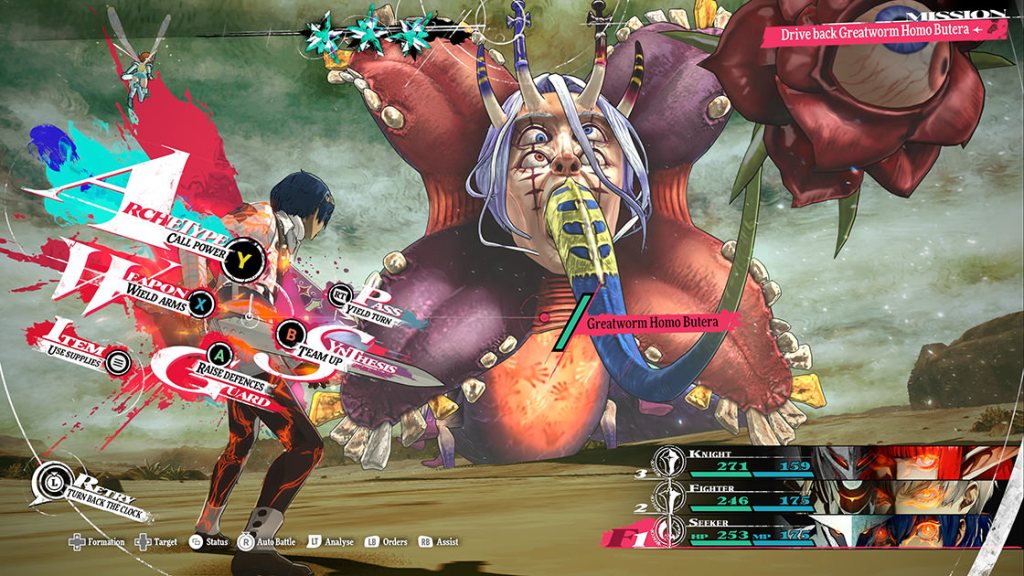
Combat in Metaphor is fast, fluid, and addictive. Traditional turn-based battles are enhanced by a revamped timeline system and a robust mix of offensive, defensive, and support roles. The ability to pre-emptively strike enemies on the field or sneak past them entirely adds an action-RPG layer, creating a dynamic flow between exploration and combat. Boss fights, in particular, are inventive and challenging, requiring smart use of Archetype synergies and strategic planning.
The game’s aesthetic is breathtaking. Shigenori Soejima’s art direction shines through in every character design, UI element, and animation. The color palette leans into deep blues, golds, and crimson, giving the world a dreamlike quality. Composer Shoji Meguro returns with a genre-blending soundtrack that fuses orchestral themes with jazz, rock, and even electronic elements. It’s daring, but it works — the music heightens both the emotional beats and the intensity of combat.
In terms of structure, Metaphor offers a good balance between narrative and freedom. As you travel across the kingdom by magical transport, you’ll encounter a variety of regions, towns, and dungeons. Each is packed with side quests, lore, and character-driven content. There’s a tangible sense of progression as your party gains the public’s trust and unlocks new support across the kingdom. Side characters are compelling, with strong writing and voice acting that elevate the emotional stakes.
If there’s a critique to be made, it’s that Metaphor: ReFantazio takes time to get going. The early hours are exposition-heavy, and the flood of systems and lore may be daunting to players unfamiliar with Atlus’ style. However, once the pieces fall into place, the narrative hooks deep, and the game becomes nearly impossible to put down.
There’s also the occasional feeling that the developers played things a little safe structurally. While the world and systems are new, veterans of Persona 5 will notice familiar beats in how social connections are formed and how the calendar-based progression influences gameplay. That said, these similarities are more spiritual than mechanical — this isn’t just Persona in armor, but something bolder.
Ultimately, Metaphor: ReFantazio is a triumph. It successfully breaks new ground while honoring what fans love about Atlus’ games: stylish presentation, layered mechanics, and emotionally resonant storytelling. It’s a reminder that the JRPG genre still has room to evolve, especially in the hands of developers willing to take creative risks.
Score: 92%
 stillgotgame.org
Leave a comment